Autonomous Mars Rover Prototype
Engineering Design Course Project – Team-Based System Design
Overview
Problem
Process
My Role
Outcome
Skills Used
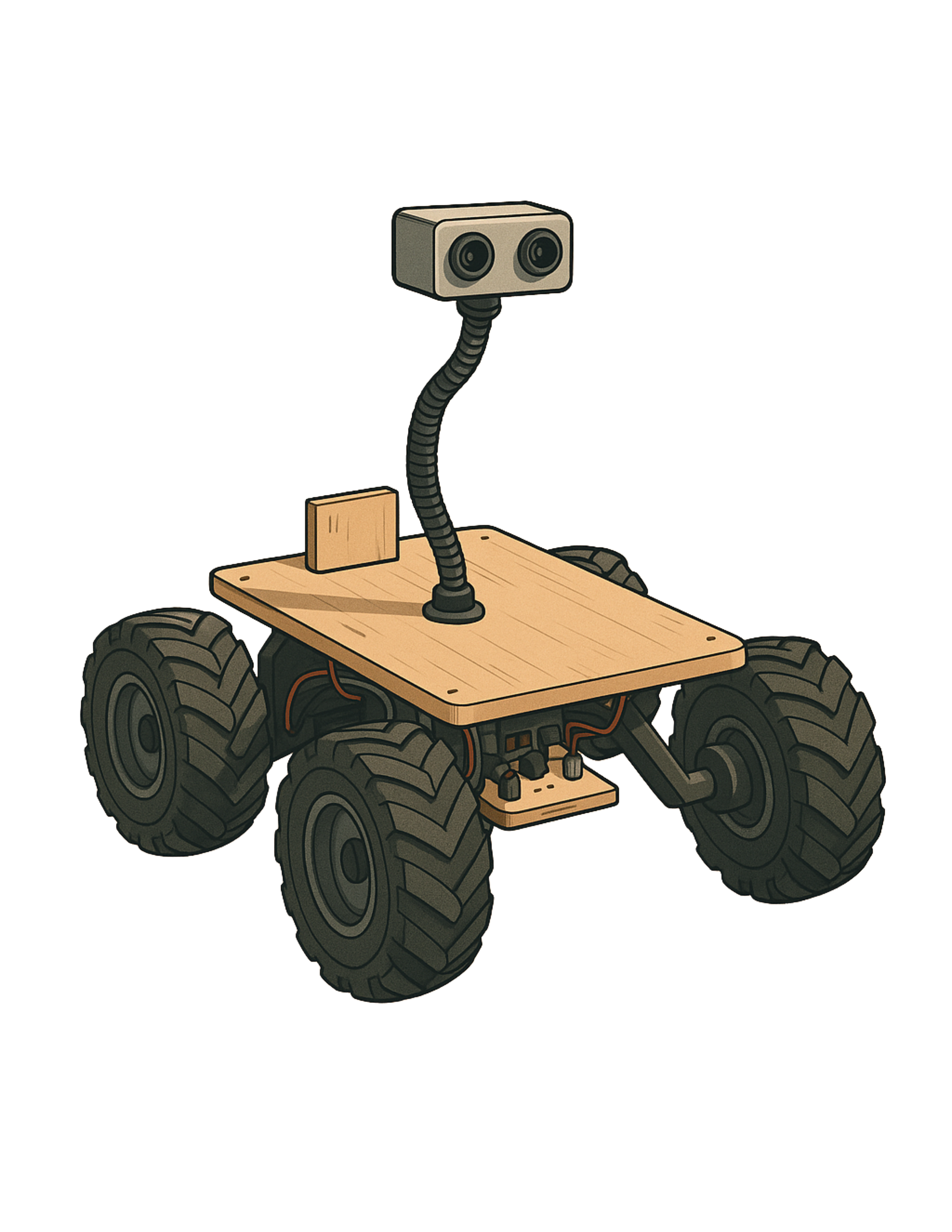
As part of an engineering design course, I worked on a team to develop an early-stage Mars rover prototype. The rover was designed to autonomously navigate obstacles, simulate communication delays, and support hypothetical scientific missions in unknown terrain.
The rover needed to traverse varied terrain using onboard sensors and decision-making logic, without manual control. Key constraints included durability, adaptability, lightweight design, and reliable obstacle avoidance.
Chassis & Suspension Design (SolidWorks):
Designed and iterated the rover chassis and suspension system in SolidWorks, focusing on load distribution, wheel clearance, and terrain adaptability. Adjusted geometry based on stability and mobility requirements.Obstacle Avoidance Logic (Python):
Programmed basic autonomous navigation using Python, integrating IR sensor input to detect obstacles and trigger directional changes based on predefined thresholds.Component Selection & Integration:
Selected drivetrain components and IR sensors based on torque requirements, responsiveness, and compatibility. Integrated mechanical and electrical subsystems into a cohesive design.Rapid Prototyping (3D Printing):
Built and refined multiple design iterations using 3D-printed components, allowing for quick testing and modification of structural elements.System Testing & Iteration:
Conducted physical testing on varied surfaces, identifying issues with traction and stability. Modified suspension and wheel configurations based on performance observations.Simulated Communication Delay:
Implemented delayed response behavior to mimic real-world Mars-Earth communication latency, improving system realism and autonomy.
Led the mechanical design of the rover, including chassis and suspension systems. Assisted in programming control logic and played a key role in system integration and iterative testing. Contributed to debugging mechanical and control issues identified during testing.
The rover successfully completed a timed obstacle course simulation. The design demonstrated strong mechanical stability and sensor responsiveness. The prototype was selected for demonstration at the department’s design showcase.
SolidWorks, Python, Sensor Integration, Mechanical Design, Rapid Prototyping, Testing & Debugging, Systems Integration, Team Collaboration