Mummy’s Maze
Interactive Biome Exhibit for the Boston Children’s Museum
Cornerstone of Engineering I – Team Project
Overview
Mummy’s Maze is an interactive museum game designed to educate children about the desert biome through an Ancient Egyptian-themed puzzle. Created for the Boston Children’s Museum as part of Northeastern University’s Cornerstone of Engineering course, our game challenges players to translate hieroglyphics into English using a laser-cut board, LED feedback system, and physical keypad.
This immersive experience teaches both historical context and real-world desertification issues while incorporating physical and electronic components, all under strict constraints for budget, size, safety, and transportability.
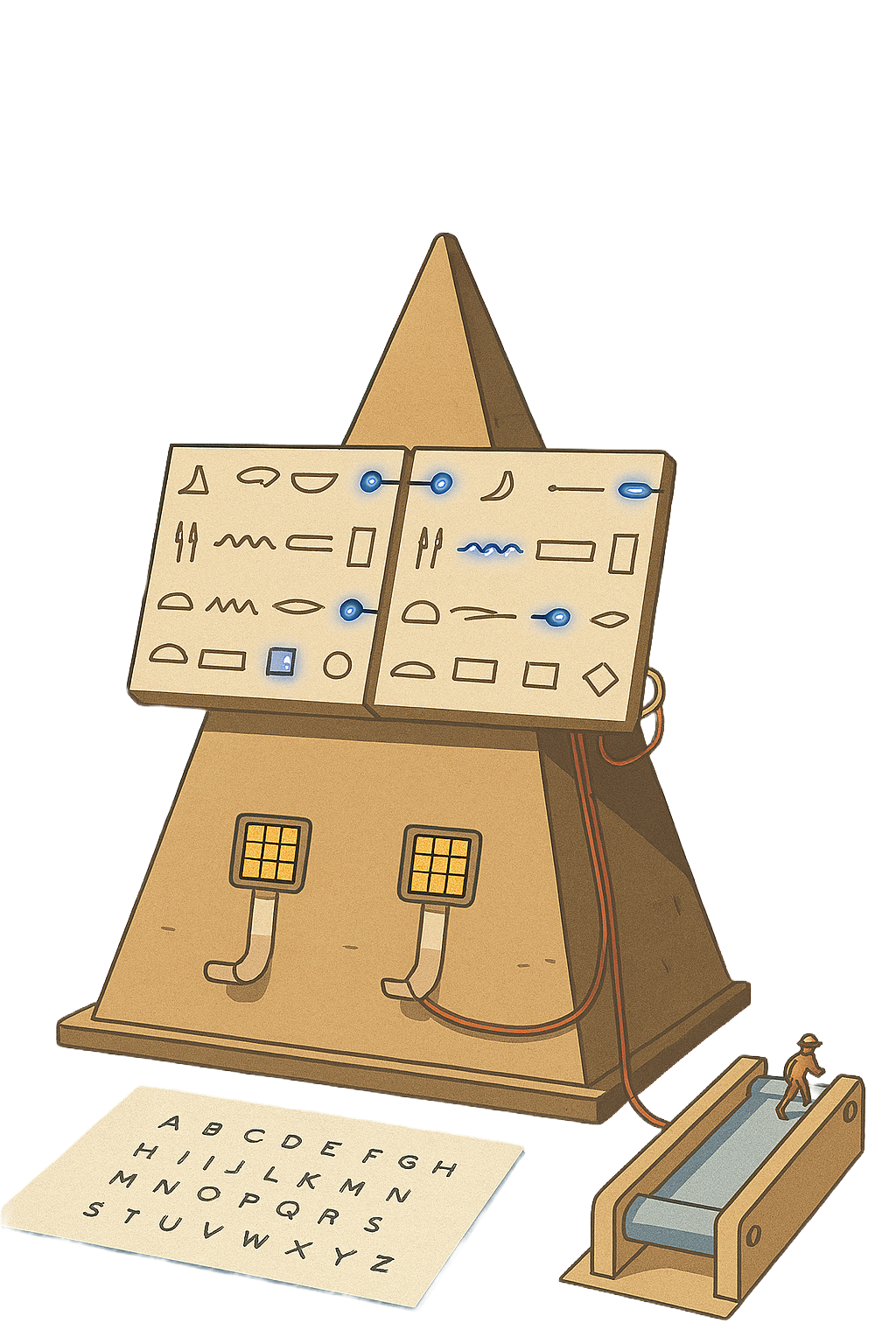
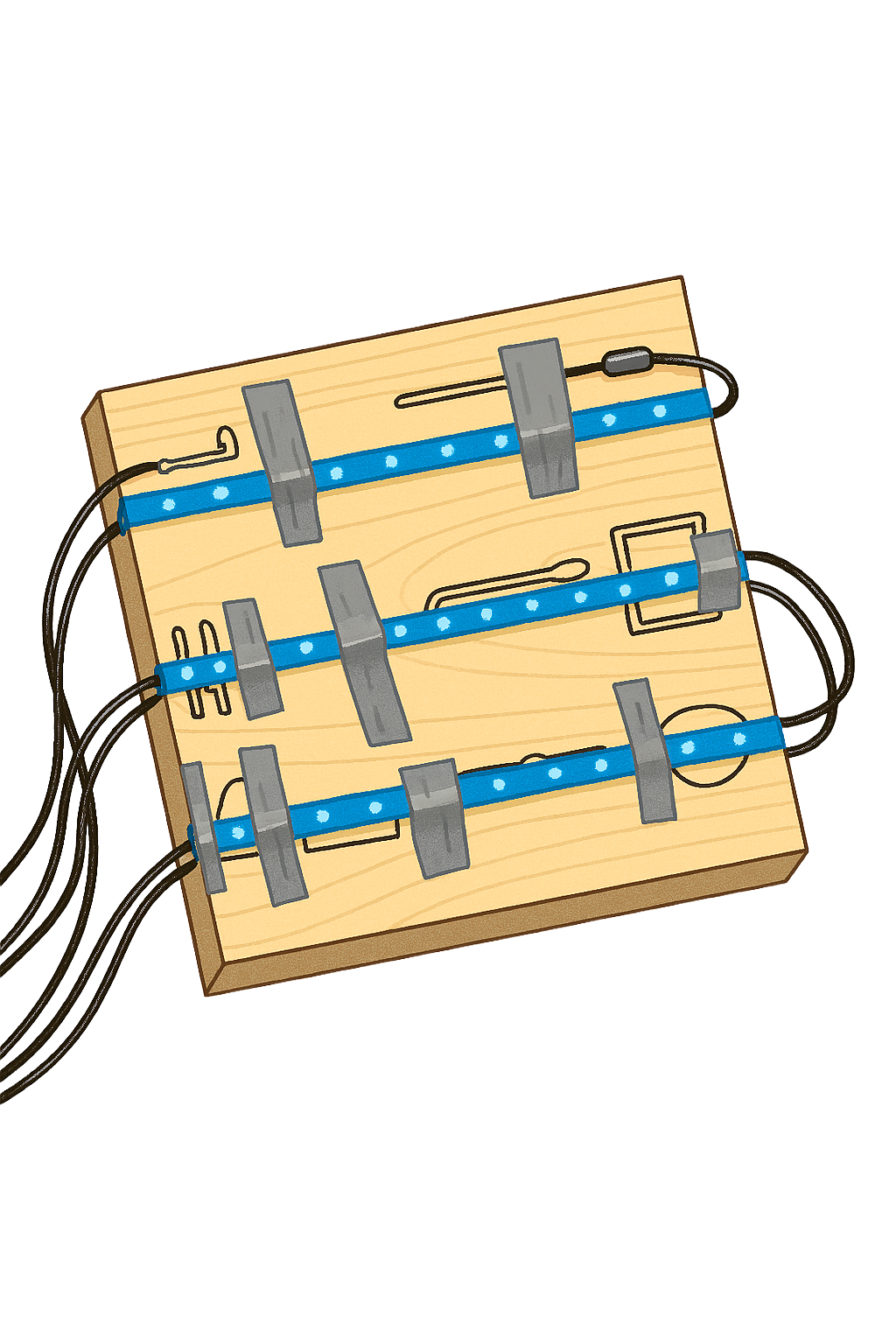
LED Integration
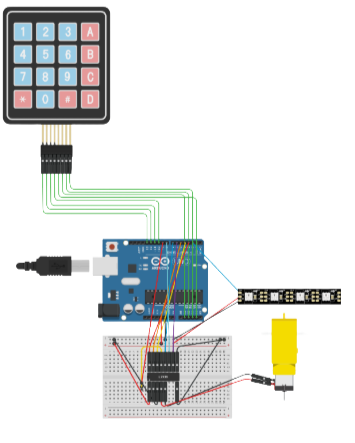
80 individually programmable WS2812B LEDs
Lights indicate correct answers (green) and errors (red)
Four rows of LEDs correspond to four-letter words
Goal and Constraints
Target User: Children aged 6–12
Theme: Desert biome
Budget: Under $120
Footprint: ≤ 10 sq. ft.
Build Requirements: Portable by hand, no sharp edges, food, or latex
Must Include: Physical + electronic components
Physical Design
Pyramid Structure
3 ft tall x 2 ft wide pyramid made of plywood
Front shelf for interaction and display
Hinged on one side for internal access
Internal wiring routed through drilled holes
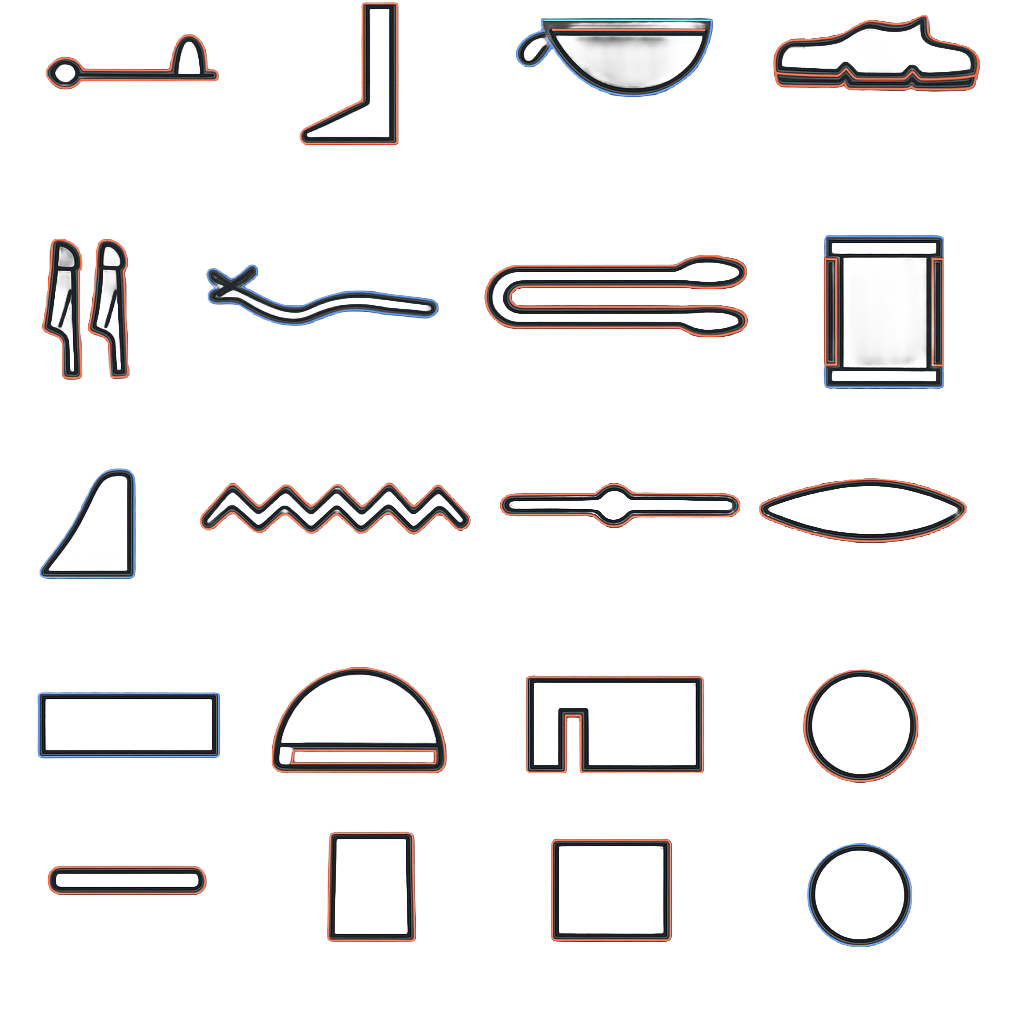
Hieroglyphic Board
Designed in AutoCAD, laser-cut from ⅛" wood
16 common Egyptian symbols traced and matched to English letters
Mounted to the pyramid front shelf for visibility
Mechanical + Interactive Elements
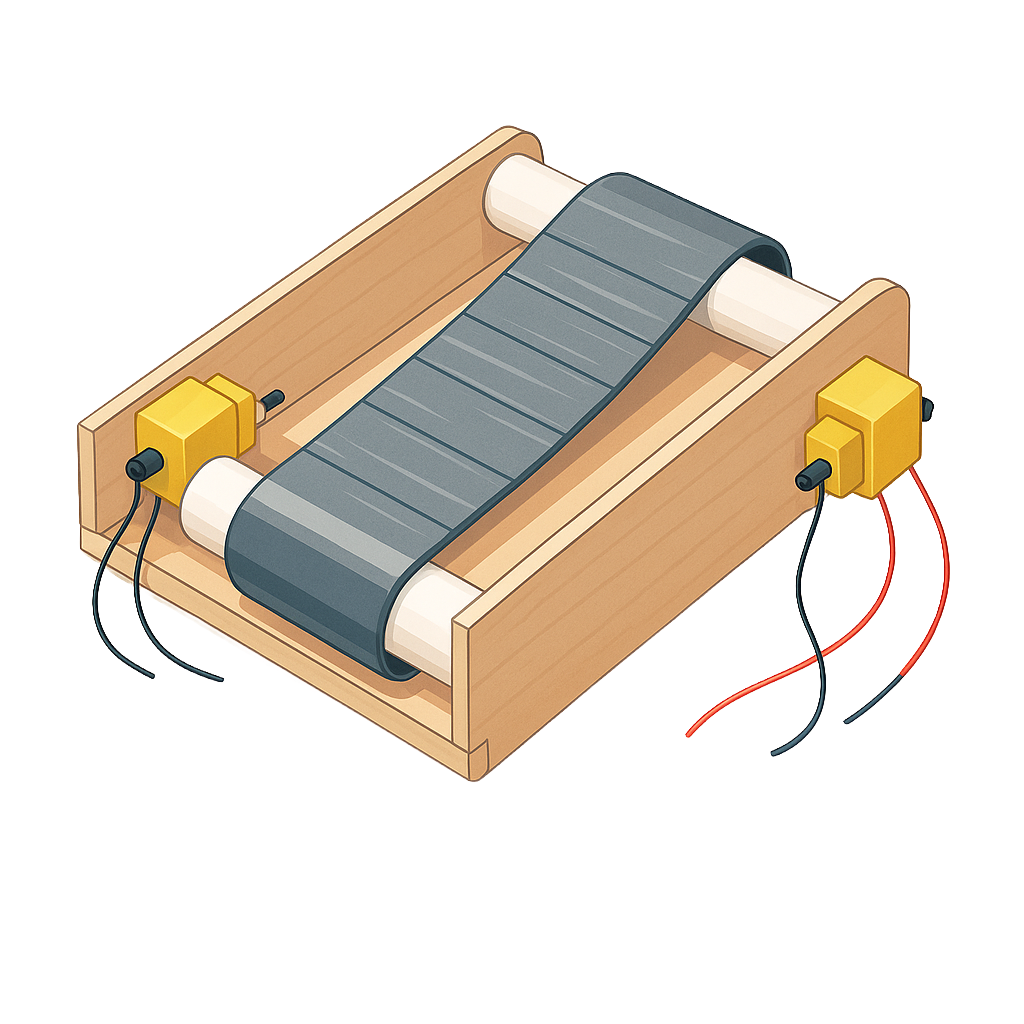
Conveyor Belt
Visual progress system showing archaeologists escaping the pyramid
PVC pipe axles + wood base + duct tape belt
SparkFun motors rotate the belt after correct answers
Electronics + Logic
Dual Arduino setup (supports multiplayer)
L293D motor driver + keypad + LED control
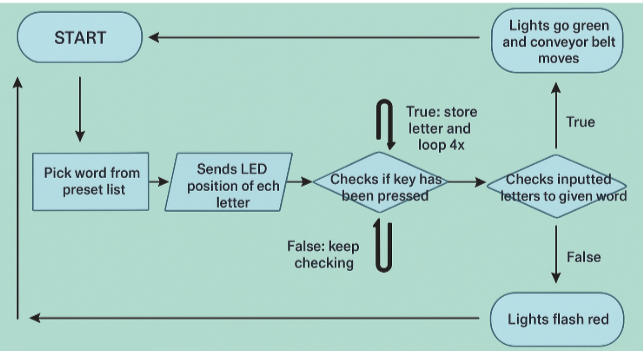
Program randomly selects word, lights up corresponding hieroglyphs
Code checks input, provides feedback, and advances game if correct
Incorrect attempts restart the process with a new word
My role
I played a role in all project phases: designing the AutoCAD board, wiring the LED matrix, programming with Arduino, and helping with pyramid construction and conveyor belt repairs.
Performance and Results
49 kids participated on museum day; 26 finished the 5-word game. Playtime averaged 3–4 minutes. No hardware failures; visually engaging and educational about ancient culture and environmental awareness.